
🏠 Crypto Crib Weekly
Bitcoin, Oil & The Senate

Another week, another reminder that crypto doesn’t trade in isolation.
While Washington edges closer to delivering the regulatory clarity the industry has waited years for, a completely different market is beginning to flash warning signs: oil.
This week investors were forced to balance two opposing forces:
🇺🇸 Positive regulatory momentum for crypto.
🛢️ Rising energy prices threatening inflation and delaying rate cuts.
Let’s break down what happened and why it matters.
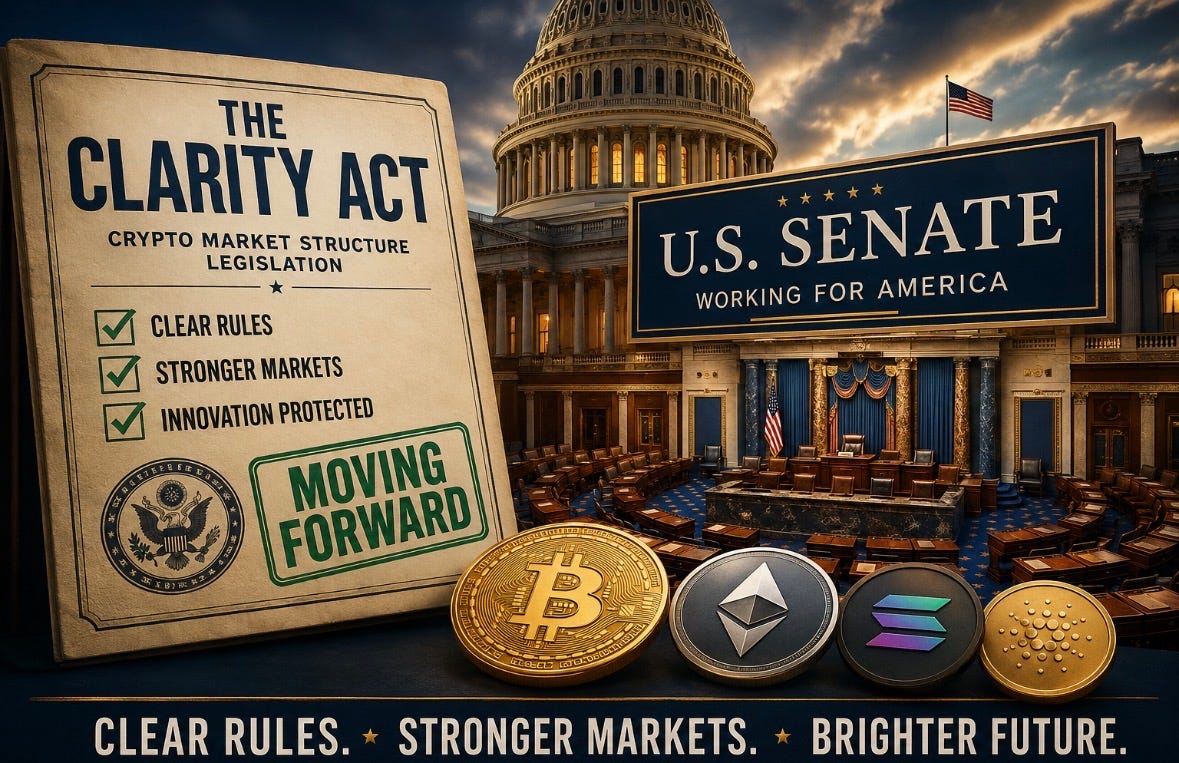
🇺🇸 CLARITY Act Inches Towards The Finish Line
For months the crypto industry has been waiting for one thing:
Rules.
This week brought the biggest progress yet.
Following negotiations between the White House and key Senators, lawmakers reached agreement on controversial ethics provisions that had delayed the bill. That significantly improves the odds of the CLARITY Act reaching a Senate vote before the August recess, although bipartisan support is still required to clear the 60-vote threshold. (Investors)
Markets reacted immediately.
Bitcoin rallied.
Coinbase surged.
Circle jumped.
Crypto mining stocks moved sharply higher.
Why?
Because the CLARITY Act would finally establish a comprehensive market structure framework for digital assets in the United States.
For institutions managing billions of dollars, uncertainty is often a bigger risk than regulation itself.
Clear rules reduce legal risk.
Reduced legal risk encourages capital.
Capital drives adoption.
That is why the legislation matters far beyond Washington.
🛢️ Oil Is Quietly Becoming The Biggest Macro Story
While crypto celebrated regulatory progress, another market grabbed economists’ attention.
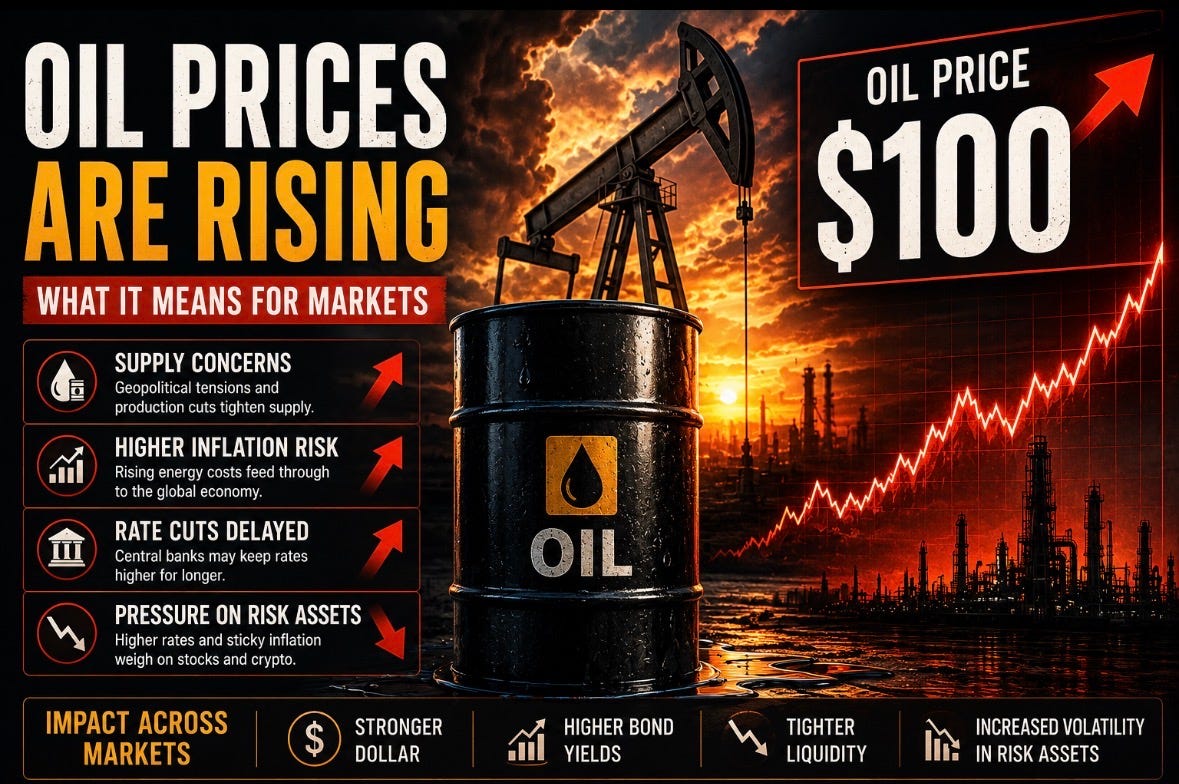
Oil prices continued climbing this week as geopolitical tensions kept supply concerns elevated. Higher crude prices increase transportation, manufacturing and energy costs across the global economy, making inflation harder to bring under control. (Investing.com)
That matters because central banks have spent the last two years trying to defeat inflation.
If oil remains elevated:
• Inflation stays sticky.
• Rate cuts become less likely.
• Bond yields can remain higher.
• Financial conditions tighten.
And risk assets begin to struggle.
Why Bitcoin Cares About Oil
Many investors assume Bitcoin only reacts to crypto news.
Reality is very different.
Bitcoin is increasingly trading alongside broader liquidity conditions.
When markets expect interest rates to stay high:
The US Dollar often strengthens.
Treasury yields rise.
Liquidity tightens.
Investors become more defensive.
Historically, that’s not the ideal environment for speculative assets.
The opposite is also true.
Lower inflation → lower rates → improving liquidity → stronger appetite for Bitcoin and crypto.
That’s why oil has suddenly become one of the most important charts to watch.
The Bigger Picture
Crypto now has two powerful forces pulling in opposite directions.
Bullish
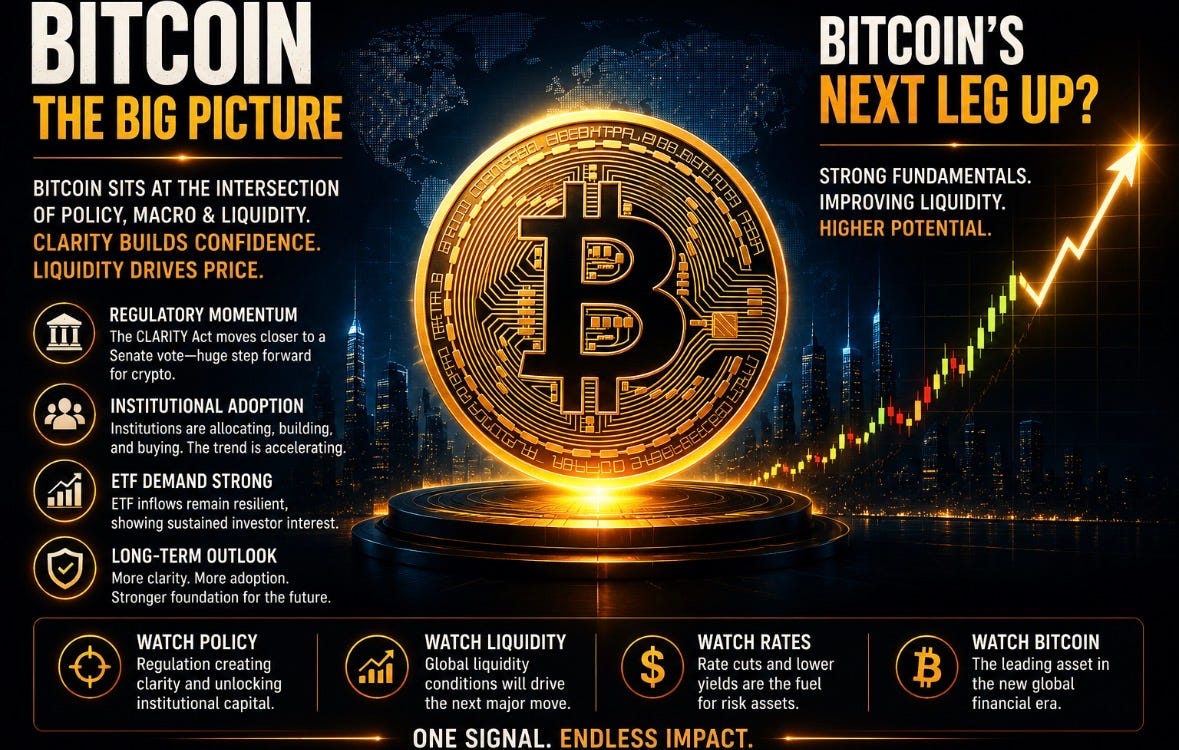
✅ Regulatory clarity is moving closer.
✅ Institutional adoption continues.
✅ ETF demand remains healthy.
✅ Washington appears more supportive than ever.
Bearish
⚠️ Rising oil prices risk keeping inflation elevated.
⚠️ Higher inflation could delay Federal Reserve easing.
⚠️ Higher rates reduce global liquidity.
⚠️ Risk assets may face renewed pressure.
The next major move in crypto may depend less on blockchain developments—and more on whether inflation can continue cooling despite rising energy costs.
Final Thoughts
This week’s price action was a reminder that crypto is no longer a niche asset class.
Bitcoin now sits at the intersection of politics, macroeconomics and global liquidity.
Regulatory progress could unlock the next wave of institutional adoption.
But if oil continues climbing and inflation follows, the macro backdrop may temporarily outweigh the bullish headlines.
As always...
Watch liquidity first. Price usually follows.
Well explained. Crypto is increasingly influenced by macroeconomic conditions rather than crypto-specific news alone. Regulatory clarity can support long-term adoption, but liquidity, inflation, and interest rate expectations often determine short-term market direction.